There is some truly awful, scary stuff going on in the world this week, and I had a busy week at work and ended the week quite worn out and stressed.
So, I was delighted when I woke this morning to a sunny day, and even more grateful than usual for some time out on the allotment away from the news, work and social media. I spent a good few hours at the allotment, pottering and getting jobs done ready for spring. It did me the world of good.
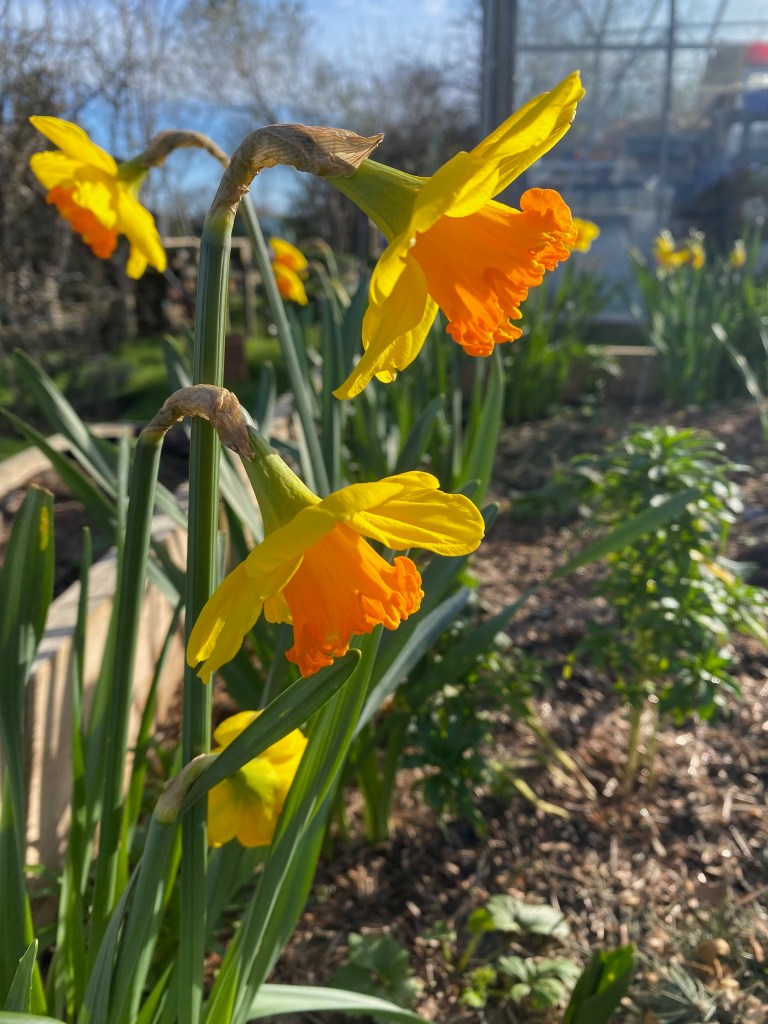
Spring bulbs in flower
It’s really lovely to see spring bulbs coming into flower: I love the vibrance and daft cheerfulness of crocuses and daffodils, heralding the arrival of spring and the end of the short, dark days of winter.

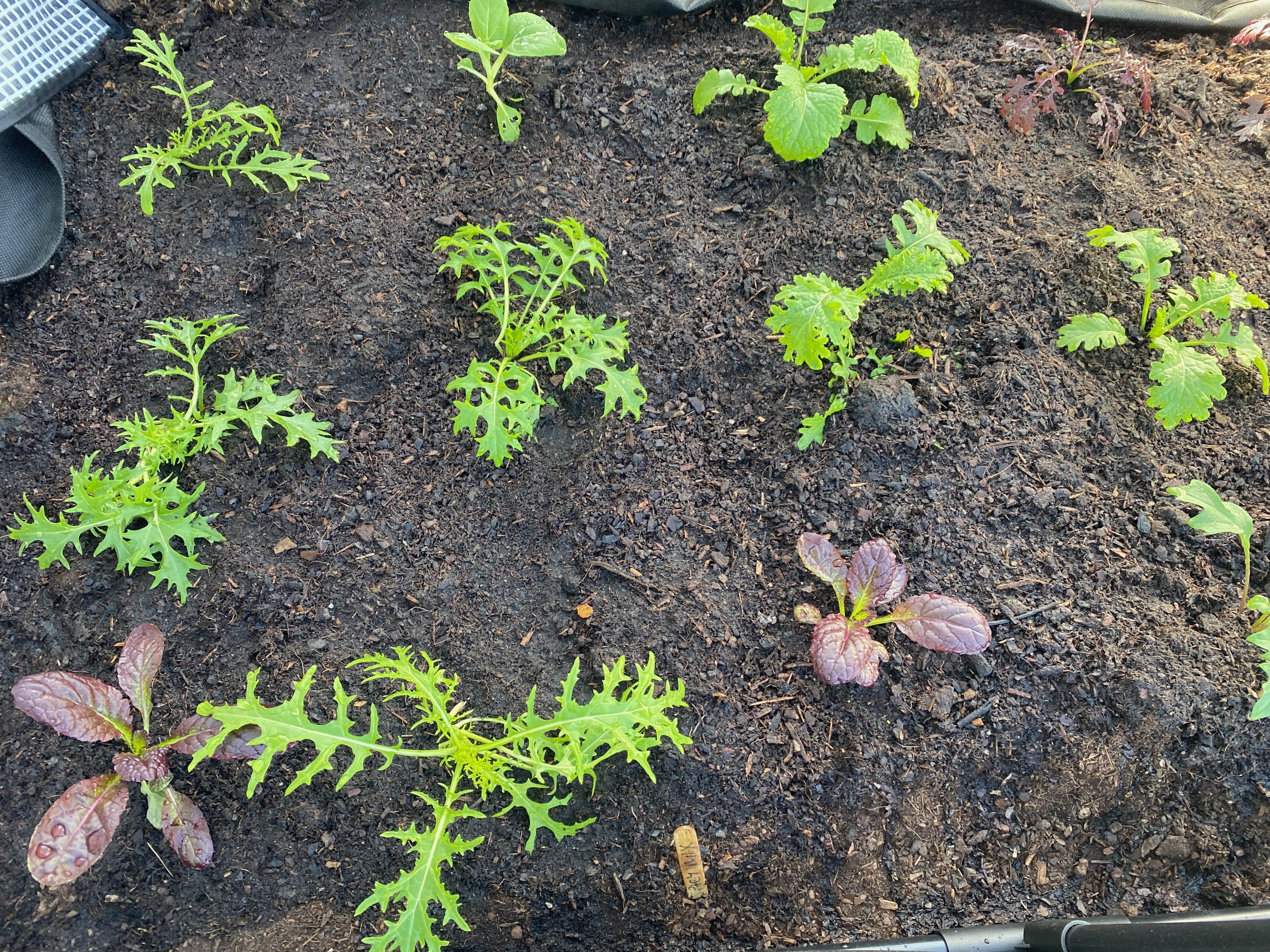
Salad leaves growing under cover
The over-wintered salad leaves are growing well in the veg trug, protected by plastic and growing in home-made compost. They’re not far off being ready for their first harvest, I’d guess in a couple of weeks time, which will be a really lovely treat when it comes.
These are from a ‘spicy mix’ of seeds I sowed in autumn and over-wintered in the cold frame, ready to grow away in the spring. That seems to have worked out well; I’ll definitely do the same again this year I think, with maybe a few more seedlings this time.
Mulching everything in sight
This time of year it’s all about making everything as ready as possible for spring, and that includes making sure there is no bare soil anywhere on the plot. One of the principles of regenerative growing is that soil should be ‘armoured’ at all times, either with a mulch or with growing plant cover. This protects the soil from erosion and compaction from heavy rain, protects the life in the soil from the elements, and helps it to maintain a stable temperature and moisture levels.
Ideally, all the ground would be covered with living plants at all times, as this feeds and maintains healthy soil life. But that’s much easier in the growing season than over winter, and in any event the soil needs a new layer of organic matter each year and now is a great time to add it, to lock in the moisture of winter help it warm up and feed the soil life.
There was a delivery of woodchip and a pile of lovely half-rotted leafmould at the allotment this week, with some of it very helpfully saved for those of us who can’t get up there during the week at this time of year. I helped myself to 2 barrows of each, and we also carted up a few barrows of rotted manure we’d brought along from the shed at home. (I ordered a bulk bag in the winter, and let it sit in the shed to continue rotting down. It’s now absolutely lovely, well rotted and ready to apply to the soil.)
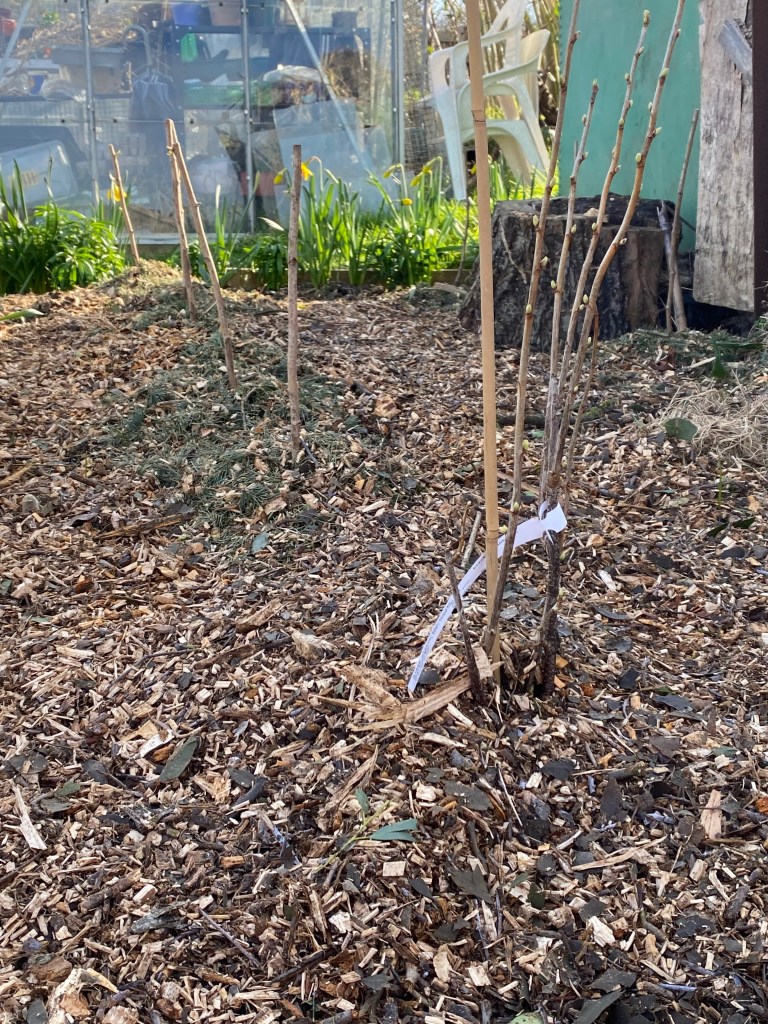
I mulched 4 beds: the fruit bed with woodchip, bed 3 with leafmould to protect the bare soil before I add more manure ahead of planting out squashes later in spring, and bed 9 and a couple of other smaller parts of beds with rotted manure.
In most of the beds, it should be enough to add an inch or two mulch each year from now on, now that the no-dig beds are up and running. I’ll add a thicker (3-4 inches) mulch to the tomato, pepper, cucumber, sweetcorn and squash beds each year (which rotate around the plot together each year as part of my crop rotation), as they really seem to benefit from the extra nutrition and water retention. That rotation means that over time they’re all getting a really good dose of organic matter.
I decided to mulch the fruit bed with woodchip because it looked and smelled like conifer (or something related), which is ericaceous and therefore friendly to raspberries and blueberries. The idea is that ther mulch will protect the soil and help it retain moisture. It should also be good for the fungi in the soil (fungi love rotting woodchip), which will in turn support healthy soil and happy plants.
Woodchip can rob the soil of nitrogen as it decomposes, because it has a high carbon content and you need a balance of carbon and nitrogen for things to rot down effectively. If the balance isn’t there in one material, the microbes doing the work will draw the nitrogen they need from nearby instead. So it’s important that there’s a layer of rotted manure (much richer in nitrogen as well as carbon) underneath the woodchip, too – I applied that a couple of months ago for fertility and organic matter that can be absorbed into the soil more readily.
Turning the compost heaps
I turned the compost heaps, something I try to do every few months to keep the composting process going at a reasonable pace and with a reasonable consistency through each heap. I think this results in better and more even compost in the end. It’s also a pleasing, calming activity (if you like that sort of thing!). The material doesn’t generally look very well rotted yet and the heaps were quite inconsistent with some very dry clumps and some parts much wetter, so it was good to give them a good mix-up.
Ideally I’d like to use this manure / compost mix as the growing medium for my winter squashes, piled on top of the soil, so I’m hoping for quicker progress over the next 10 weeks or so. I had a good go at mixing it all up and adding plenty of air, and merged 3 bins into two to make each pile bigger. I’m hoping now I’ve done that, they’ll get going and warm up again over the next couple of weeks. They might need another turn in a few weeks’ time to keep things moving. Having said that, it doesn’t matter too much if it’s not fully rotted when it’s time to plant out the squashes – it can be piled on the soil and continue the process there, over the summer.
I don’t know why but I find turning the compost heaps, and the whole process of composting, very calming and satisfying. It’s something to do with the sheer wonder of time and micro-critters we can’t see turning waste into lovely worm and plant food. I love it.
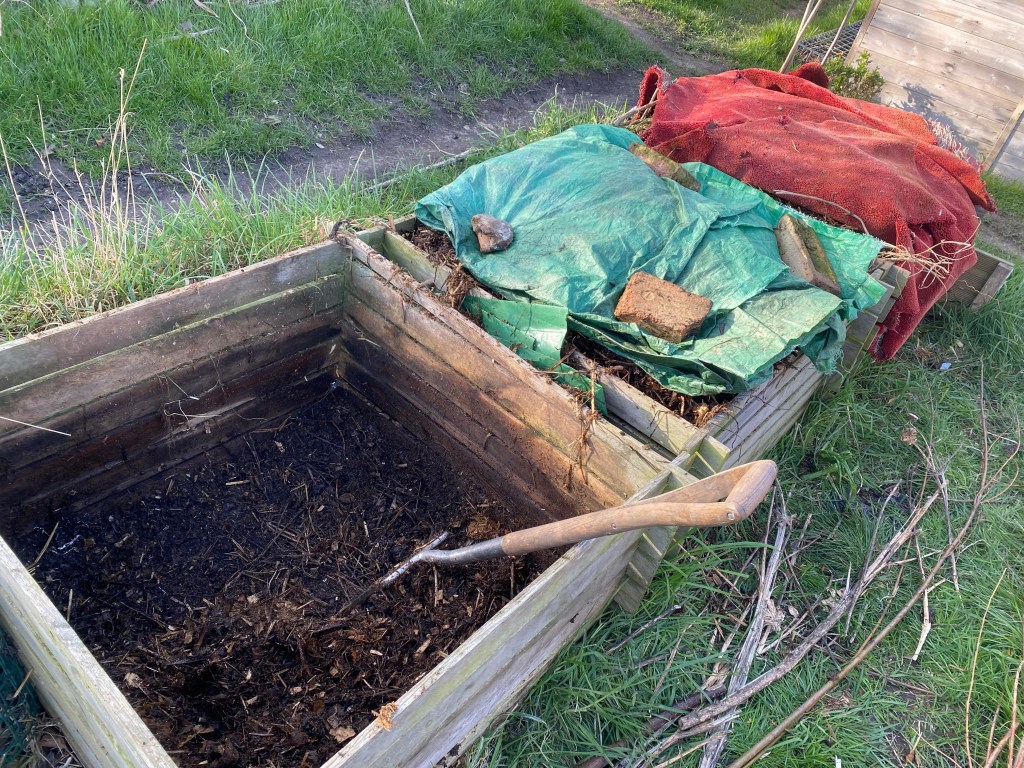
3 compost bins turned and merged into 2
Last of the late winter harvest
I harvested some parsnips, leeks, beetroot and a bit more purple sprouting broccoli – I’ll have the beetroot roasted, steam the PSB, and make the parsnips and leeks into a lovely soup for dinner.

Soil improvement joy
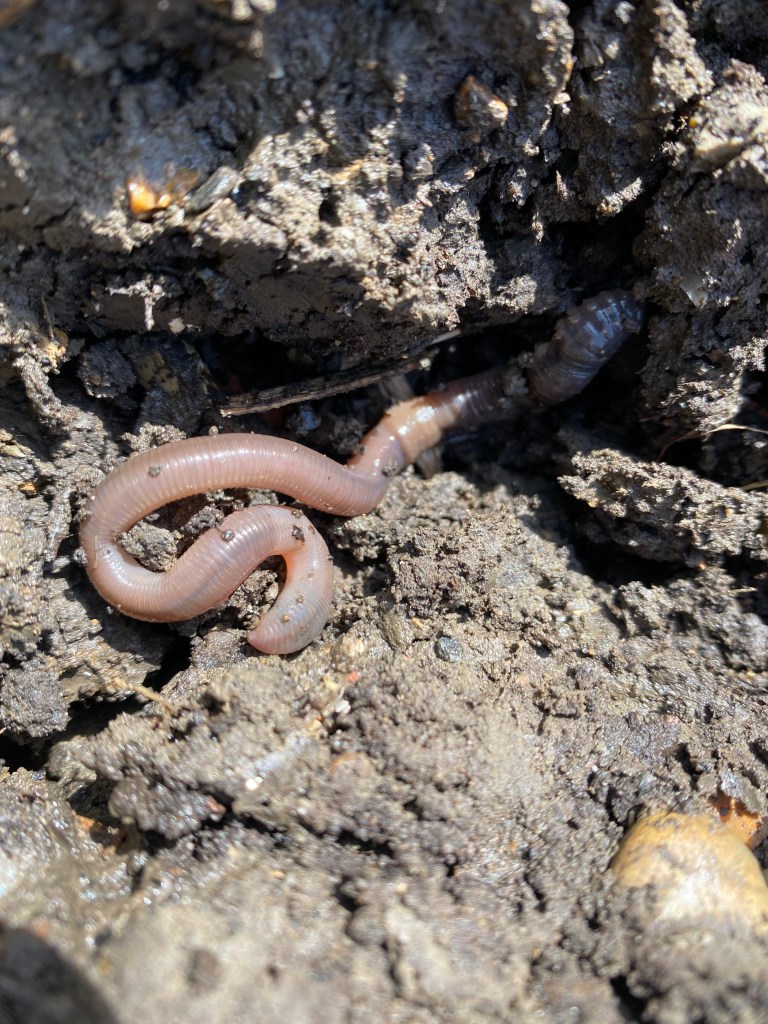
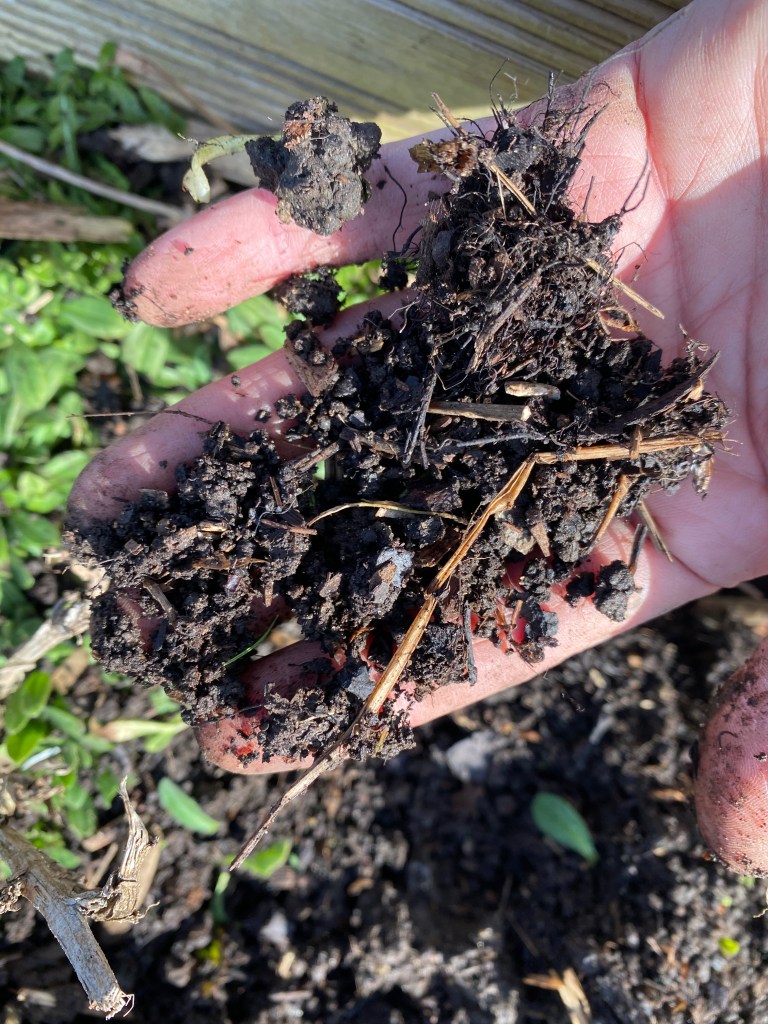
I was really delighted to find the soil where the parsnips had grown had absorbed the mulch I applied in the autumn and is lovely, dark and full of fat worms – a great sign of healthy soil. The soil is so much better than it was when I used to dig it – I can’t believe how quickly it’s improved since I stopped digging and started adding a lot more organic matter each year.
It’s easy to pull out weeds with their roots intact (and you get a lot fewer annual weeds because you’re not disturbing the soil and exposing new seeds each year), you can easily sow seeds and be confident they’ll make good contact, and the soil just feels lovely in your hands. Picking up healthy soil and feeling its texture, smelling it and inspecting it for critters makes me feel calm and centred in a way that few other things do.
The soil in our beds is far from perfect, and it will always be clay with all the challenges and benefits that brings, but it’s really a lot more satisfying and workable than it used to be during my digging days.
The first outdoor-sown seeds of the season
I sowed a few seeds – the first seeds of the year on the allotment:
The carrots and radishes are protected under a layer of fleece – I’m hoping that if the weather stays mild and the fleece does its job they’ll get off growing nice and early for harvesting in April and May.
I also transplanted some self-sown forget me not plants to the edges of beds, and fixed the broken shed window.
A lovely, sunny, relaxing afternoon

It was so lovely to spend some time outdoors, getting my hands dirty and connecting with my plants, compost and soil. I feel much better.
I really hope you’re managing to find some solace too in these scary times.

 Keeping the Plot
A lovely, inspiring post! As I sit surrounded by snow, reading about your productive day assures me that mine will come, too. Eventually the crocus that are just now tiny tips protruding from the mulch will bloom and seeds will be planted. Hopefully the ground will thaw enough that I can dig the last of the carrots and leeks, and that my daffodils will be as gorgeous as yours!
LikeLike
Thank you 🙂 I hope it’s not too long before your ground starts to thaw 🙂
LikeLike