It was wonderful to get outside today in the warm sunshine. The snow has melted away, the sky is blue with a few clouds, and the temperature here in London is a balmy 16C, made slightly cooler by the cool wind. I walked to the allotment listening to the end of Mark Cocker’s book about the history of conservation in the UK – an interesting read.
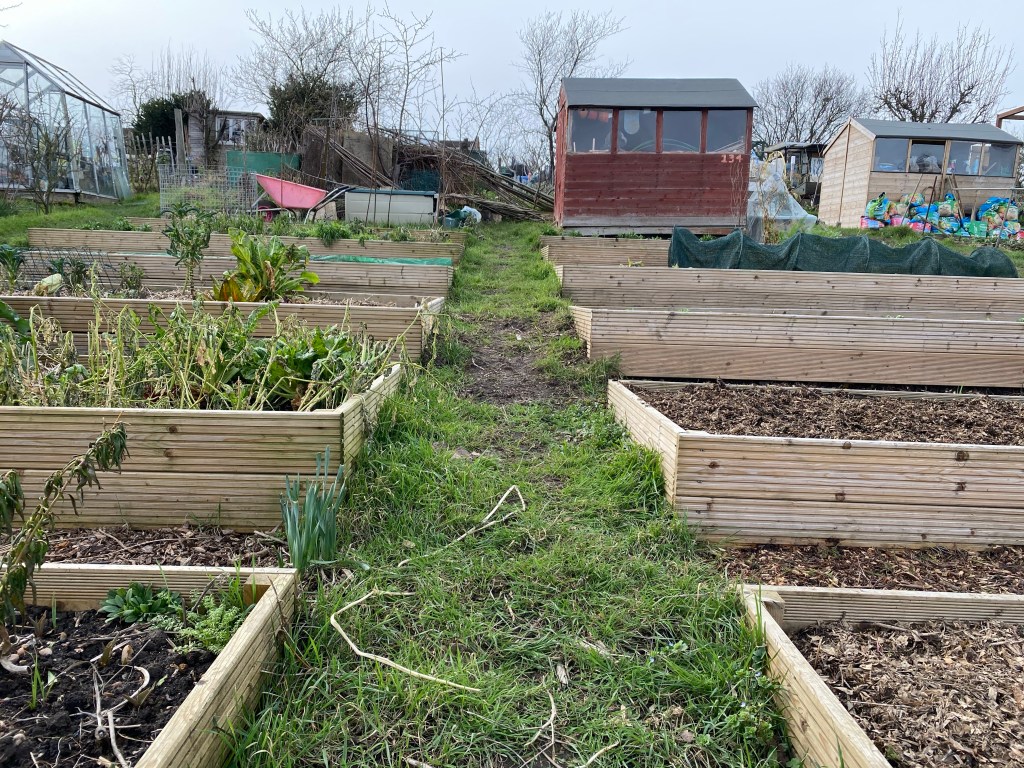
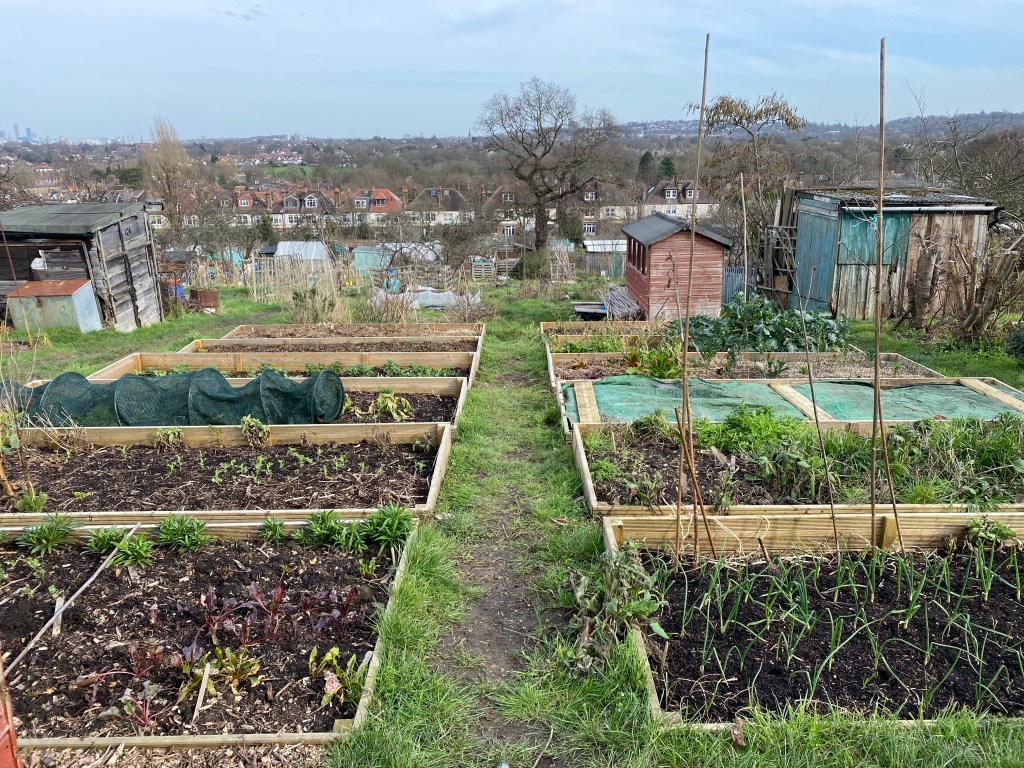
Up on the plot, it’s finally time to start getting the beds ready for new seeds and plants. I was really pleased to find the manure that’s been cooking over the winter was ready to use, and all the plants looking well recovered from the snow (last weekend it all looked a bit bleak, frosted and wilted and I wasn’t sure if everything would make it through).
I sowed green manures in some of the raised beds in the autumn. I sowed a mix of seeds in each bed, following the regenerative principle of diversity to support a diversity of soil life and serve a range of purposes. I was hoping to:
- add some organic matter to the soil through the roots and above-ground growth.
- fix nitrogen in the soil for this year’s brassicas and salad leaves
- feed the soil micro-organisms to keep them thriving ahead of this year’s growing season
- protect the soil surface from damage and compaction over the winter
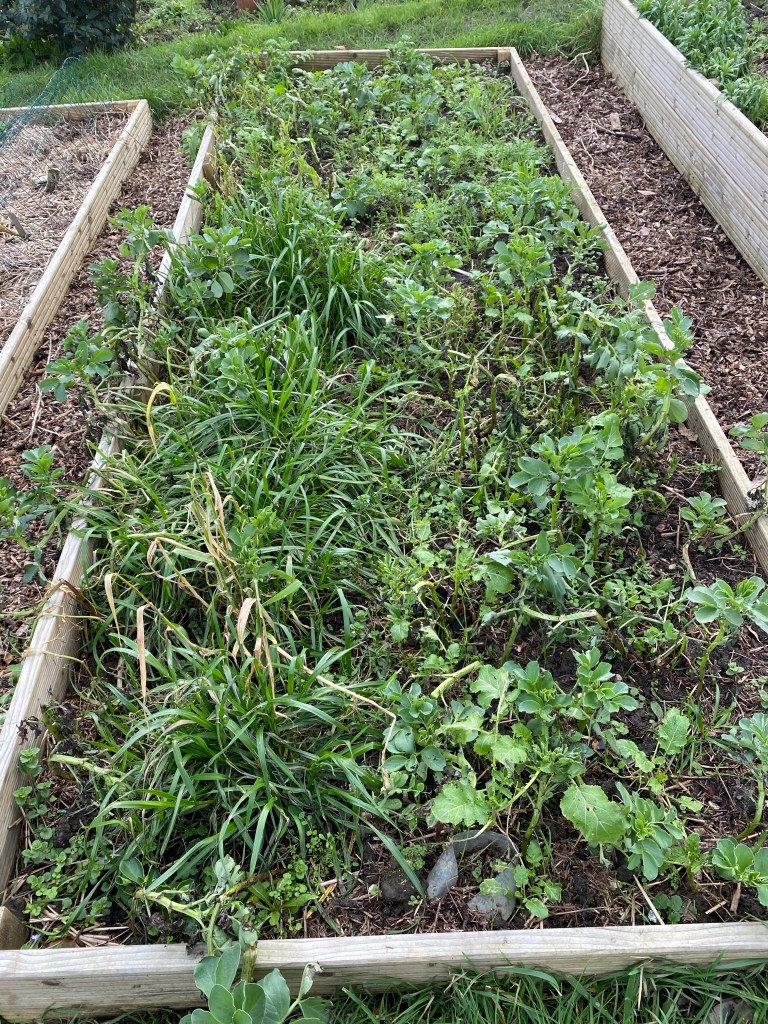
The performance of the green manure beds was quite variable, with the earlier sown seeds taking off and growing a thick cover over the soil and the later sown ones remaining quite small, not providing much soil cover but hopefully at least adding organic matter in the form of the roots beneath the soil surface. Lesson learned: sow the seeds in August / September – October is too late for them to get going before the winter.
Now the snow is gone, the days are lengthening and I’m getting ready for a sowing frenzy from March onwards. I cant wait for spring to get going. Now, it’s time to start cutting down the green manures and getting the beds ready.
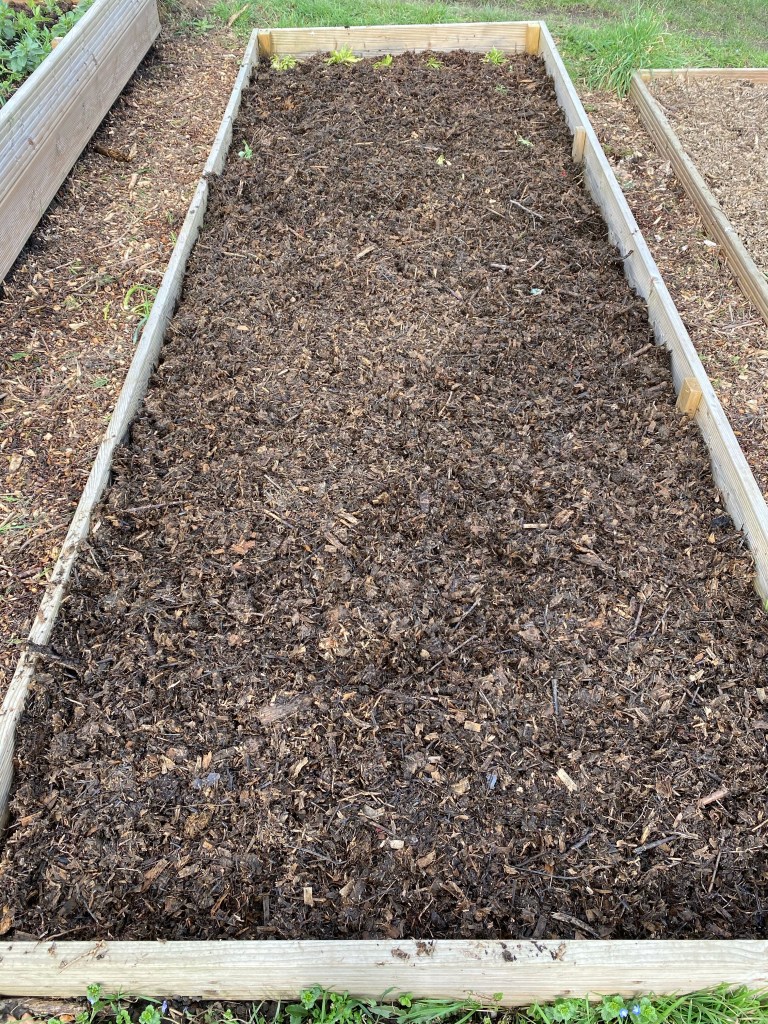
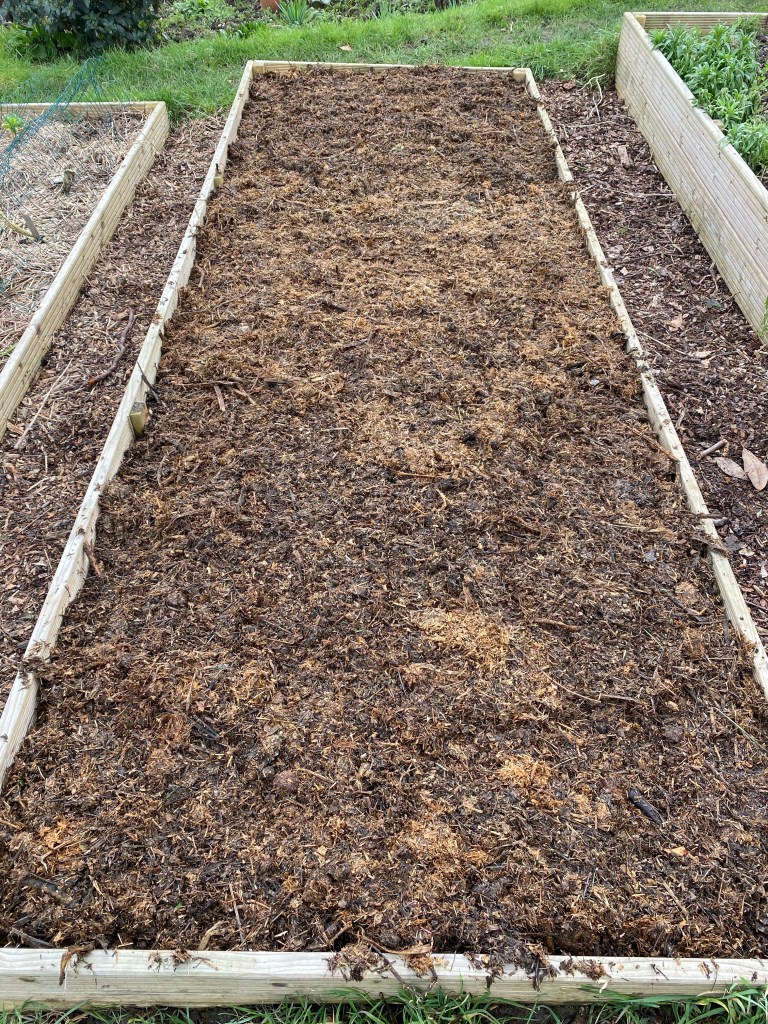
In the bed where fewer seeds germinated or survived the winter, I hoed off the little plants, left them on the surface and covered them with a couple of inches of well rotted manure. I’ll leave that to settle for a couple of weeks and then sow my first beetroot and fennel of the year in there, probably using a bit of potting compost to line the seed furrow.
I’m really looking forward to seeing how this year’s plants perform – the bed should be perfect for them; it had a lot of manure added last year for the squashes, had green manures growing over the winter, hasn’t been dug for a year and now has another layer of manure. If I’ve got it right right, then the beetroot and fennel should really thrive in there. Last year I included radishes in the rotation with beetroot and fennel but it didn’t thrive. I’ve since learned that radishes don’t like recently manured earth, so this year they’ll be going in with the parsnips and carrots. Let’s see how it goes….
In the bed where the beans, rye grass and other manures really took off, where I’ll be growing brassicas this year, I took a different approach. The growth was much thicker, and the plants much more strongly growing. I didn’t want to just cut them down and cover them with manure, in case they grew back and became weeds. But I didn’t want to dig them in either because it’s a no-dig bed…
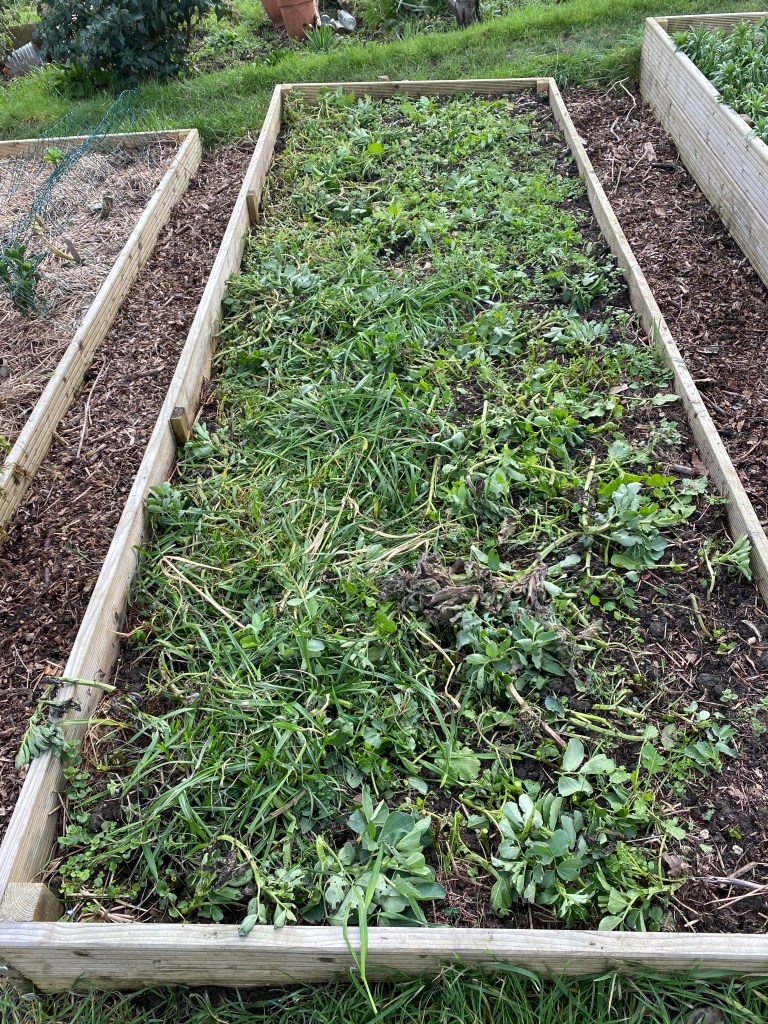
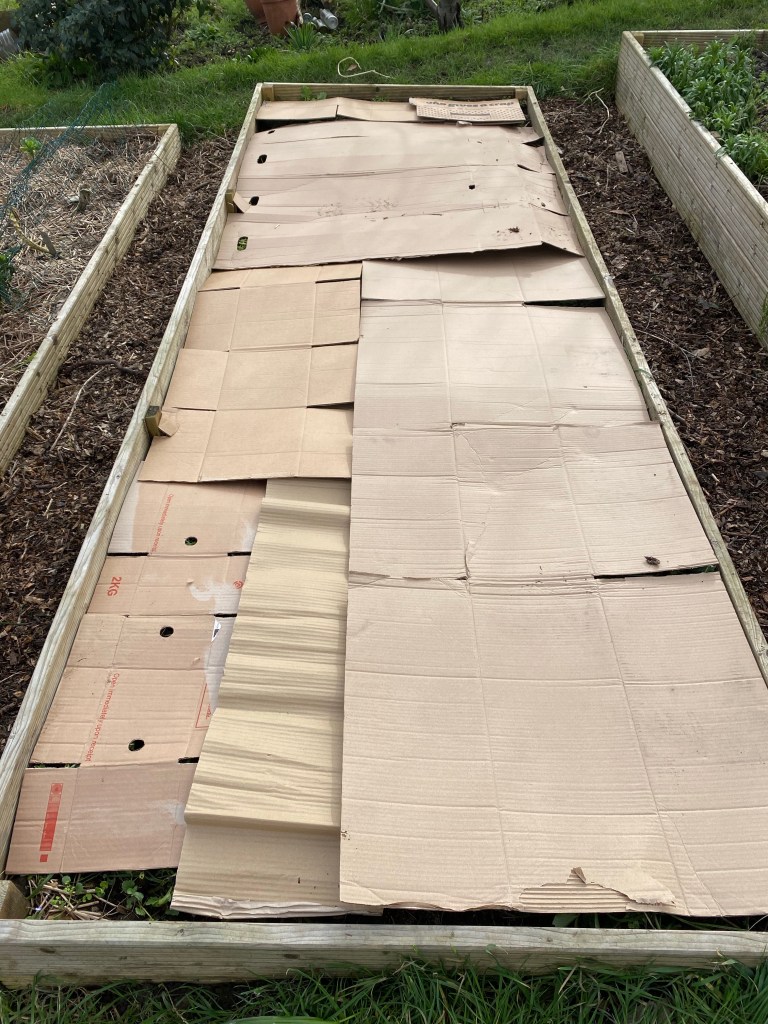
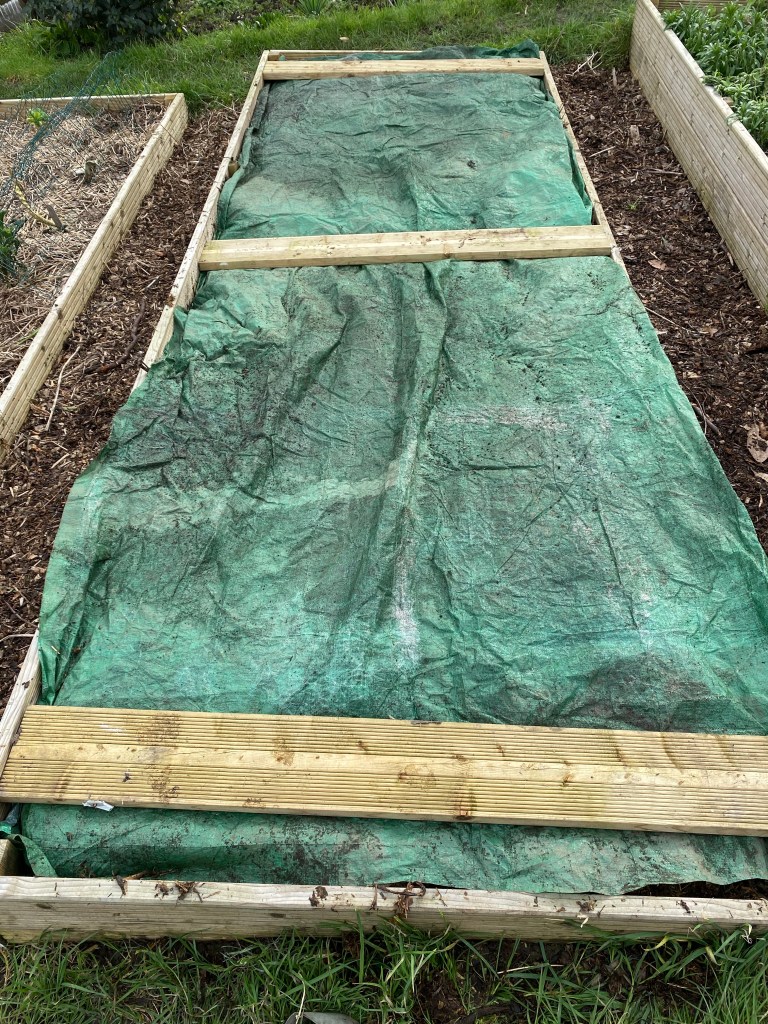
So, I cut down and chopped up the luscious green growth, then I covered the bed with a single layer of cardboard to block out the light and kill off the plants. I covered that with 2 inches of well rotted manure and then covered that with a (cut to measure) piece of tarpaulin to keep the soil warm and dry so I can sow and plant into it in a few weeks’ time.
I’ve already got some tiny PSB seedlings on a windowsill – they should be ready to put into the cold frame this week and then plant out a few short weeks after that. I’ll sow some broccoli and cavolo nero in the cold frame this week, too, and that will be the full bed sorted. (It’s going to be warm all week so I’ve decided to take a risk and sow them a little early. I can always so another batch if it doesn’t work out, and I can’t wait to get going sowing seeds because it’s such a lovely thing to do to herald the end of winter!).
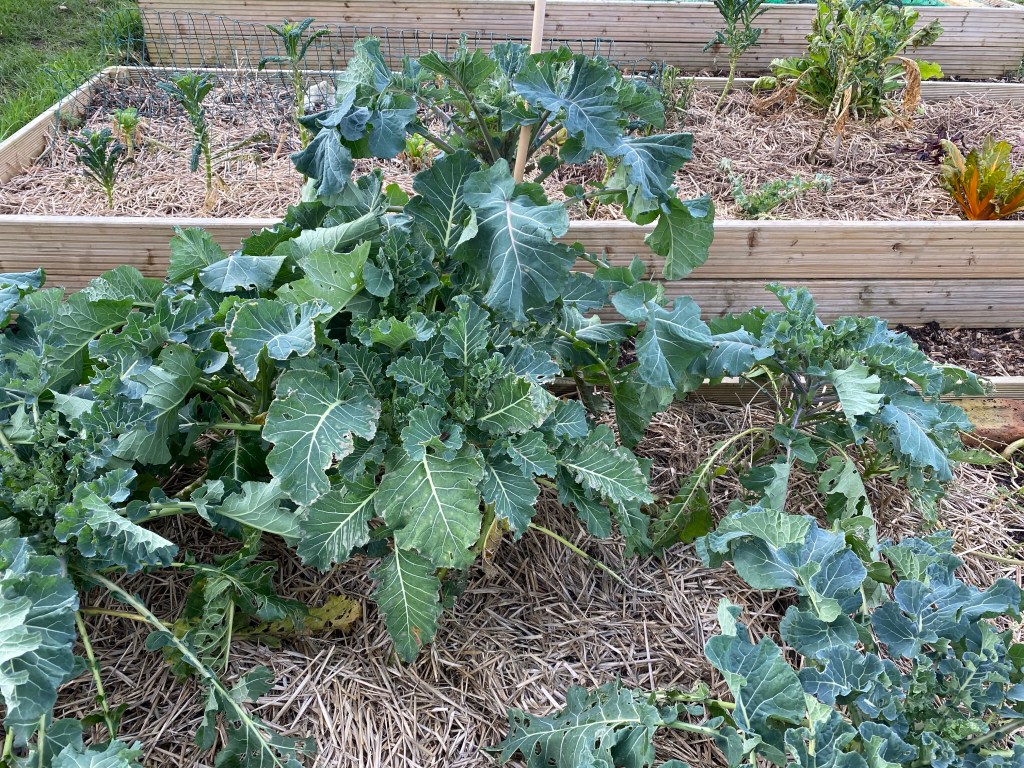
Meanwhile last year’s PSB has recovered from the snow – no sign of broccoli spears yet but they should be coming soon. I can’t wait. I absolutely love PSB.
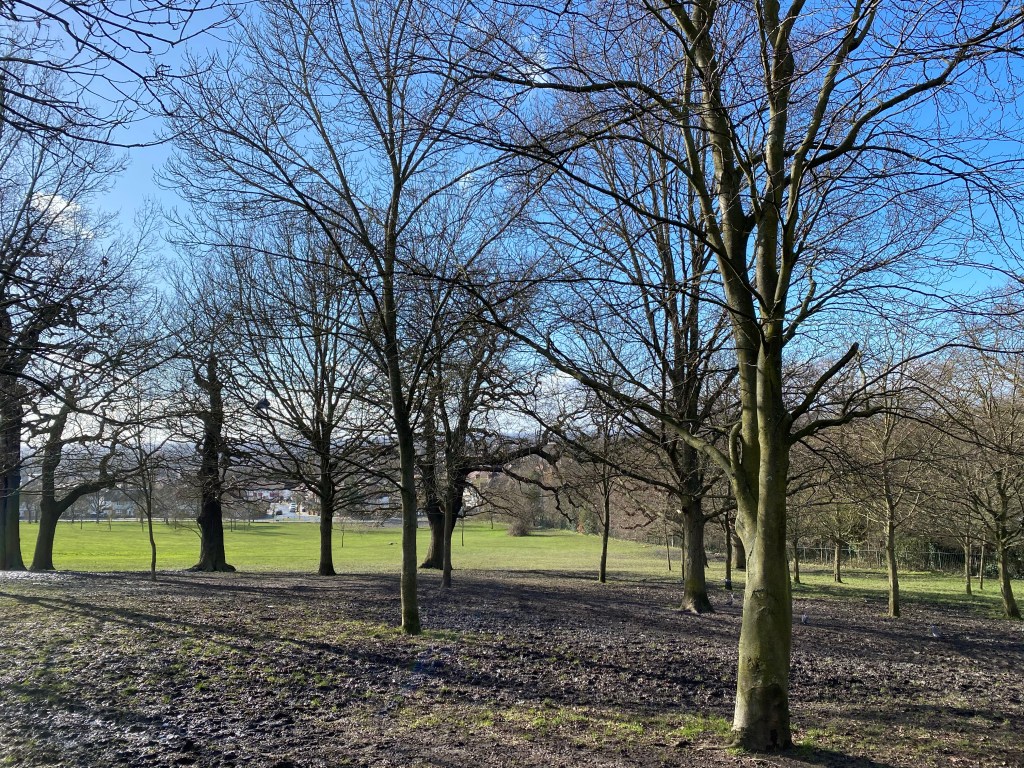
The change in light, warmth and sunshine this week has really lifted my spirits. I’ve managed to keep up with my daily step targets, get outside for a few walks and make it to the weekend without feeling utterly shattered.
I also had my first covid jab, which was a huge relief and made me unexpectedly quite emotional: its real, the end is in sight, we are almost there (I hope).
Here’s to more weeks like this, longer and warmer days, the sowing and growing season finally starting and a future in sight without this awful disease keeping us all apart.
allotment Anxiety beetroot Broad Beans calendula carrots chives cold frame compost coriander cucumbers daffodils February flowers fungi green manures hellebores January kohl rabi leafmould lettuce limanthes douglasii March no-dig no dig organic matter parsnips peas peppers PSB radishes Raised beds salad leaves seedlings seeds slugs soil Soil ecology spinach spring sunset sweet peas tomatoes VegTrug winter

 Keeping the Plot